The average global price for a data leak in 2023 hit an incredible $4.45 million. That figure goes beyond the world of IT and represents a significant loss of money, reputation, and customer loyalty, which, of course, affects the bottom line.
So far, data security and digital marketing have been interpreted as two separate areas.
Security teams are responsible for building the walls of the fortress, while marketing teams are out in the field, gathering leads and customer information.

And this is in addition to the fact that nowadays marketers rely heavily on personal data for efficient advertisement targeting and a personalized user experience, which, on the one hand,
This includes email marketing campaigns, where marketers collect email addresses, track open rates, click-through rates, and behavioral data to create targeted email sequences.
On the other hand, customers whose data is misused or leaked are very likely to stop using the services or products of the company.
In this article, we examine the growing rate of threats to businesses, the ways in which security is a direct component of marketing strategy, and the measures that you can take to elevate your level of protection.
Besides, we incorporate real-life examples of how the largest companies have creatively used data privacy as a step ahead.
Why data security matters more and more
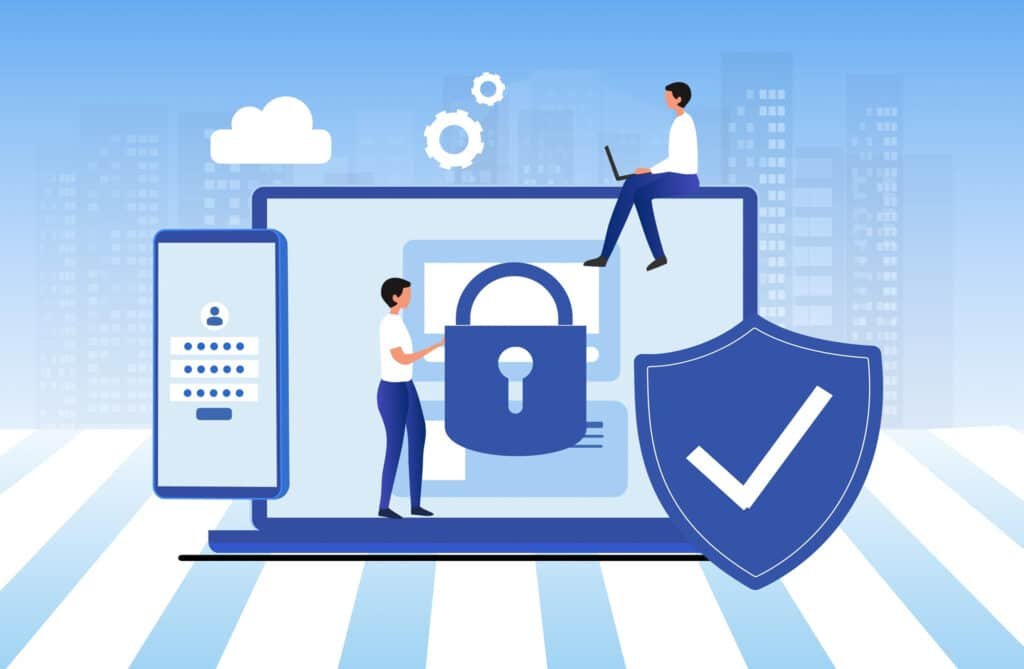
The digital world is turning into a battleground.
Cyberattacks aimed at customer data – phishing schemes, ransomware, SQL injection – are not only happening more but also getting more sophisticated.
Marketers have access to the most sensitive customer data, such as names, emails, purchase histories, and behavioral data; hence, they are targets to be attacked by hackers.
Email databases, in particular, are prime targets since they contain verified contact information that can be exploited for phishing attacks or sold on the dark web.
When your email marketing platform is compromised, thousands of subscriber email addresses can be exposed instantly.

✅Consumer trust is the new currency.
Today’s customers know how to use technology. They are aware of the worth of their information and thus are very careful when it comes to sharing their info with a brand unless they believe that the chosen brand complies with the privacy rules.
When consumers share their email address or credit card with you, be sure they expect you to treat these details with the highest care.
Therefore, if the data is leaked or stolen, the consumer will no longer trust the company. In fact, digital trust can be considered a kind of currency. Once lost, the cost and time to earn it again are extremely high.
✅Pressure from governmental agencies
Besides consumers’ needs, laws continue to tighten the effectiveness of penalties. Several guidelines aligned to the General Data Protection Regulation (GDPR) in the European Union and the California Consumer Privacy Act in the United States set highly demanding requirements when it comes to collecting, storing, and using data.
For email marketers, this means ensuring proper consent mechanisms, providing clear unsubscribe options in every email, and maintaining detailed records of how email addresses were obtained.
Besides high potential fines, your company will suffer significant reputational damage if the case is made public. Nowadays, marketing departments need to collaborate with the compliance officers continuously to guarantee that their promotional campaigns comply with the law.

Data Security And Digital Marketing Strategy
It’s not something you react to when the data gets leaked. Security should shape the entire digital marketing strategy from the beginning.
📌Personalization vs. Privacy
One of the greatest issues in marketing now is how to give consumers customized experiences while at the same time protecting their privacy.
Because customers want one-to-one experiences – intuitive product suggestions according to previous purchases, or getting the kind of content that matches their preferences.
In email marketing, this means sending personalized email subject lines, dynamic email content based on past purchases, and triggered email workflows that respond to user behavior.
However, this is only possible if a large volume of data is gathered. Marketers might feel at risk that they may be seen as creepy if they collect a lot of personal data. For instance, tracking which emails a subscriber opens, which links they click, and when they engage with your emails can feel invasive if not handled transparently.
Solid security measures will guarantee that whatever data is gathered is done so in a transparent manner and kept in a secure location, thus allowing the marketer to give good quality content without going beyond the boundaries of the user.
📌Brand Reputation
Good security makes a brand more attractive. A brand that can prove that it secures its customers’ data can be trusted and seen as professional. On the other hand, a data breach can be a catastrophe that reverses all the brand’s positive efforts in an instant.
Imagine sending an apology email to your entire email list explaining that their data has been compromised, then the unsubscribe rates would skyrocket, and your email sender reputation would plummet, potentially landing future emails in spam folders.
People no longer pay attention to your comeback album; instead, they are talking about your inability to protect the fans’ personal details, which makes your album sales and popularity less exciting.
📌Campaign Effectiveness
Maintaining good data hygiene is essential for the success of a campaign. Secure and “clean” data means more precise targeting and higher returns on investment. In email marketing specifically, clean email lists with verified email addresses lead to better email deliverability rates, lower bounce rates, and higher engagement metrics.
If your data sets are hacked or corrupted through poor security, you will be directing your campaign towards people who are either inappropriate or merely bots, thus wasting your ad budget.
Your email campaigns might end up in spam, your email sender score could be damaged, and you might even get blacklisted by email service providers. You can have confidence in your analytics and, therefore, make more informed decisions and optimizations if you operate securely and have access to clean data.
Marketing Data Security Measures
There is no need to become a computer hacker to secure your marketing data; just follow certain practices, for instance.
🎯Encryption and Authorization Management
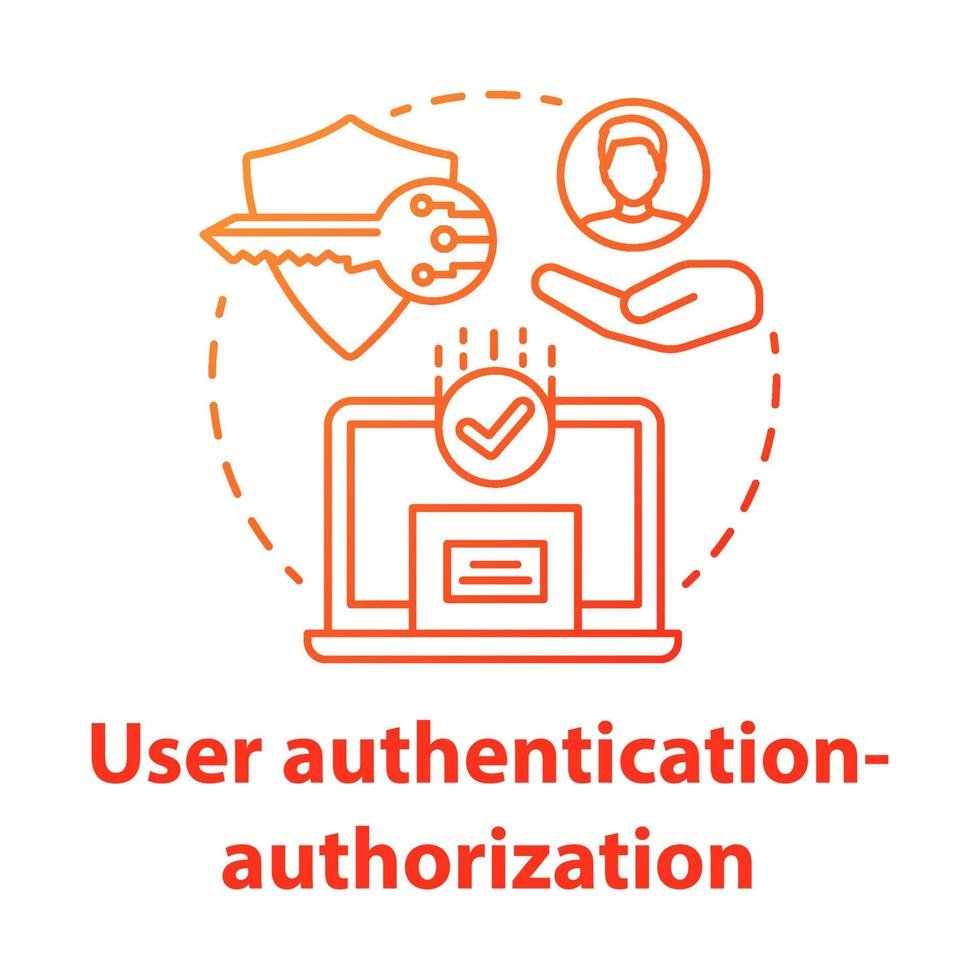
If you encrypt your customers’ details lists, you will be able to store those files safely. The principle behind this is that even if someone manages to intercept the details during the transfer, they cannot read the information without having the key to decode it.
This is particularly critical for email marketing platforms where email addresses, subscriber preferences, and engagement data are constantly being transmitted between your email service provider (ESP) and your CRM system.
Besides, a marketing team member does not have to be allowed to access all the data points, literally. She/he has limited permission to only access the information essential to do his/her work.
For example, someone creating email templates shouldn’t necessarily have access to the entire email database with personal information.
🎯Security Review
There are multiple software tools involved in digital marketing, like CRM, email marketing, and social media schedulers.
Your email marketing platform, whether it’s for cold email outreach, automated email drip campaigns, or newsletter distribution, should undergo regular security audits to ensure email data is encrypted both at rest and in transit.
You need to perform security audits every quarter on these platforms.
Check if your email service provider offers features like two-factor authentication, secure email API connections, and compliance with email security standards like DMARC, SPF, and DKIM to prevent email spoofing.
🎯Choosing Secure Prospecting and Outreach Tools
When selecting sales prospecting and email outreach tools, security should be a top priority alongside functionality.
Platforms like GrowMeOrganic that offer B2B contact finding and cold email automation need to demonstrate robust data protection measures.
Before integrating any tool that handles email addresses and contact data into your marketing stack, verify that it complies with data privacy regulations, uses encryption for stored email lists, and has transparent policies about how prospect email addresses are sourced and protected.
A breach in your prospecting tool could expose not just your own data, but also the email addresses of thousands of potential customers you haven’t even contacted yet.
🎯Device Security
Furthermore, marketers’ day-to-day devices need to be safe. Most of all, this service is important for those who work from home or have a hybrid mode of operating, and freelancers need to log in to digital platforms through unknown networks (coffee shops or laptops that are not protected by passwords).
When accessing your email marketing dashboard or sending bulk emails from unsecured locations, you risk exposing your email credentials and subscriber lists to potential hackers.
Besides trying to find ways to cut marketing expenses as much as possible, marketers explore different troubleshooting tools that facilitate traffic and lead generation activities on their marketing network.
To help professionals in their software selection process, the experts at VPNPro constantly test and list the best cheap antivirus software that not only gives full protection against malware but at the same time is also budget-friendly. When you purchase hardware with reliable security, you are basically making the first step in the fight against cyber crimes.

Security Leads to Growth and Success
Those who have cleverly designed their brand identity around data privacy can be counted on the fingers of one hand.
👉Apple: Putting Privacy First
Apple has been very successful in privacy as a major product differentiator with their “Privacy: That is iPhone” advertisement. They allowed less ad tracking and gave users more control over their data, thus positioning themselves as the leader in consumer privacy.
Apple’s Mail Privacy Protection feature, which hides email open rates from marketers, forced email marketing professionals to rethink their engagement metrics and focus on click-through rates and conversions rather than open rates alone.
This strategy helped Apple to separate itself from competitors whose primary source of income is ads, and at the same time, built a stronger loyalty among the privacy-sensitive segment of users.
👉E-commerce Brand Transparency
An e-commerce company in the middle-market that made its security upgrade public is a perfect example. They did not include the new encryption, which is the major change in the terms of service.
Instead, using a single message, they brought the readers directly to the explanation of the new measures and what these mean for the protection of customer cards.
They sent a transparent email to their entire subscriber list explaining the security improvements, which not only reassured customers but also demonstrated that the brand valued email communication as a trust-building tool.
It turned out that both customer retention and trust scores saw an increase that could be directly attributed to security updates, revealing the power of security improvements as marketing messages.
👉Learning from “the bad examples.”
By comparison, these are the houses of cards that fall when social media platforms or big box chains try to keep a data leak secret.
An eruption of user dissatisfaction occurs when transparency is off the table; the users are left broken-hearted forever.
Companies that delay sending breach notification emails or try to downplay the severity in their email communications face severe backlash, with subscribers marking their emails as spam and permanently opting out.
Security and Marketing: What the Future Holds
With the introduction of new technologies, the collaboration between the two rapidly expanding compartments, security and marketing, is inevitable.
👉Marketing without Cookies
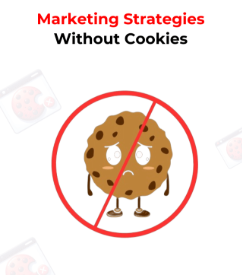
Third-party cookie elimination is challenging marketers to take another route: first-party data, namely, data personally provided by clients.
This shift makes email marketing even more valuable, as email addresses represent direct, permission-based first-party data.
Building an engaged email list through opt-in forms, lead magnets, and email signup incentives becomes a core strategy for marketers moving away from cookie-based tracking.
As the data is the property of the brand, the risk and responsibility for protecting it are more significant than before.
Therefore, marketers will have to site-build robust, secure systems for data acquisition and retention, besides ensuring they are law-compliant and maintaining the quality of the insights derived from the data.
This includes securing B2B email databases collected through prospecting tools and ensuring that every email address in your cold outreach campaigns was obtained ethically and is stored securely.
👉AI and Blockchain
AI plays an equivalent opposite pair role; the algorithm assists the marketing teamin carryingy out segmentation and targeting for personalized content.
AI in email marketing can optimize email send times, predict which subscribers are likely to engage, personalize email subject lines, and even generate email copy that resonates with specific segments.
On the other hand, it is highly advantageous for security in fraud prevention by the detection of suspicious patterns long before a breach takes place.
AI can identify suspicious email activity, such as unusual login locations or bulk email exports, and flag potential security threats before your email database is compromised.
Further, blockchain will be utilized as a potent tool providing transparency for data usage, giving the data owner an unalterable record of data sharing and usage.
Restoring confidence in the age of digital
Previously, data security was just a matter of fixing an issue that arose.
However, lately, it has become one of the fundamental pillars of a digital marketing strategy that governs the success of any marketer.
Along with protecting the brand and ensuring that the company complies with the regulation, data security, among other things, is the ingredient that is always there for building trust, which, in turn, helps to convert prospects into customers.
If, at some point, you happen to come across the notion that conducting a data audit is time-consuming, why not experiment instead by assuming that you have never done one?
Start by auditing your email marketing setup: review who has access to your email lists, check if your email service provider is compliant with data protection regulations, verify that your email authentication protocols (SPF, DKIM, DMARC) are properly configured, and ensure that every marketing email includes a clear unsubscribe link.
Make sure your team is on the same page when it comes to data management practices, use reliable software that is not vulnerable to attack, and let customers know that you respect their right to privacy.
Consider adding a brief privacy reassurance message in your email footer or welcome email series to remind subscribers that their email address is safe with you.
After all, in the digital era, trust becomes the ultimate factor contributing to the increase of sales – it’s up to you now to do everything that’s in your power to maintain that trust.
About Post Author