Digital marketers and social media managers are stretched thin. On top of managing endless marketing channels, many teams still work in silos because they don’t have integrative workflows.
Email marketing and social media outreach, for example, are two of the most effective channels for audience engagement. But when used together, they create exponential visibility.

But most marketers still treat them as separate strategies.
Luckily, we’ve put together this helpful guide to help you pick a tool that unifies both.
Let’s take a closer look at the top six tools marketers can use to merge both channels for higher reach, engagement, and ROI. 👇
Why Combining Email and Social Outreach Matters
Every marketing channel has its own benefits and drawbacks.
Ambitious brands lean on multiple marketing channels to make sure they can reach and nurture as many leads as possible. In fact, brands with strong omnichannel engagement strategies see 179% faster revenue growth than companies without.
But having a separate tool for each channel is a lot of upkeep and contributes to data silos.
Teams have to track results across multiple tools to try to make sense of what’s working.
Thankfully, integration brings campaign data together, so teams can create unified brand messaging across platforms and get better analytics and tracking.
Integrated tools also support higher engagement through retargeting and personalized touchpoints. And since teams get cross-channel visibility, they can better understand how to nurture leads according to their preferences and goals.
For example, if a marketing team is promoting a new vanilla fragrance, they can use email automation to group people who already like vanilla notes. Then, they can send them special offers, like special vanilla-scented gift sets or perfume samples.
They can also sync their tools so anyone who opens those emails also sees social ads about the same vanilla scent.
This creates a unified flow that reinforces what the user already enjoys, encouraging greater interest and sales.
What to Look for in Integration Tools
When shopping for an email and social media outreach integration tool, make sure they offer these must-have features:
✅Cross-platform automation (email + social) to automate integrated campaigns.
✅CRM and contact syncing to make sure all tools keep your contacts and engagements up to date.
✅Segmentation and personalization to help you set up different customer groups and send targeted messages to each segment.
✅Analytics dashboards for performance tracking so you can track which campaigns are working well and which ones need tweaking.
✅Ease of use, scalability, and pricing flexibility to make sure the tool fits into your workflows, lines up with your budget, and can grow with your business.

That said, let’s review some tools that can help.
7 Best Tools for Email and Social Outreach Integration
The tools below can help automate outreach, improve targeting, and save time.
✅GrowMeOrganic: Best for LinkedIn Outreach
GrowMeOrganic is an all‑in‑one platform for email outreach and outbound prospect research.
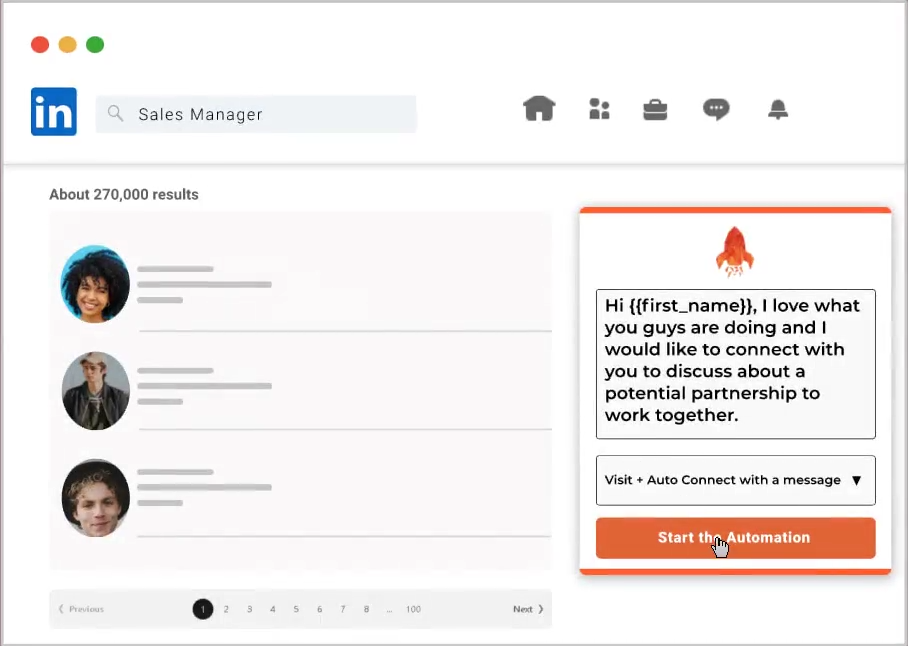
Popular with B2B marketing teams, GrowMeOrganic can help you extract prospect data from LinkedIn and run automated, personalized cold email campaigns.
The platform stands out with its unlimited credits. You can extract unlimited verified emails and phone numbers in bulk with its LinkedIn email finder Chrome extension to build your prospect list. Then, schedule hyper-personalized cold emails with its cold email software.
You can also segment users and automate follow-ups based on their behavior.
GrowMeOrganic also tracks open rates, click-throughs, replies, and conversion rates so you can uncover which cold pitches land best.
Pricing ranges from $39 to $199 per month, depending on how many users and LinkedIn accounts you link. And whether you choose a monthly or annual plan.
✅GrowthToolkit: Best for Verified B2B Contact Data and LinkedIn-Driven Prospecting
GrowthToolkit is a prospecting and enrichment platform for finding real-time, triple-verified business emails and phone numbers. It suits sales and marketing teams that need fresh, low-bounce contact data from current companies, especially when sourcing from LinkedIn or enriching CRMs.
Key strengths include:
✅Real-time verification (SMTP, domain/MX, server checks) with very low bounce rates
✅People Search across hundreds of millions of b2b professionals and companies
✅Email/Phone/Domain/LinkedIn enrichment with bulk and API options
✅Chrome extension to turn LinkedIn/Sales Navigator results into verified contacts
✅API and webhook integrations for real-time data sync
✅Catch-all handling and deep search to discover more valid contacts
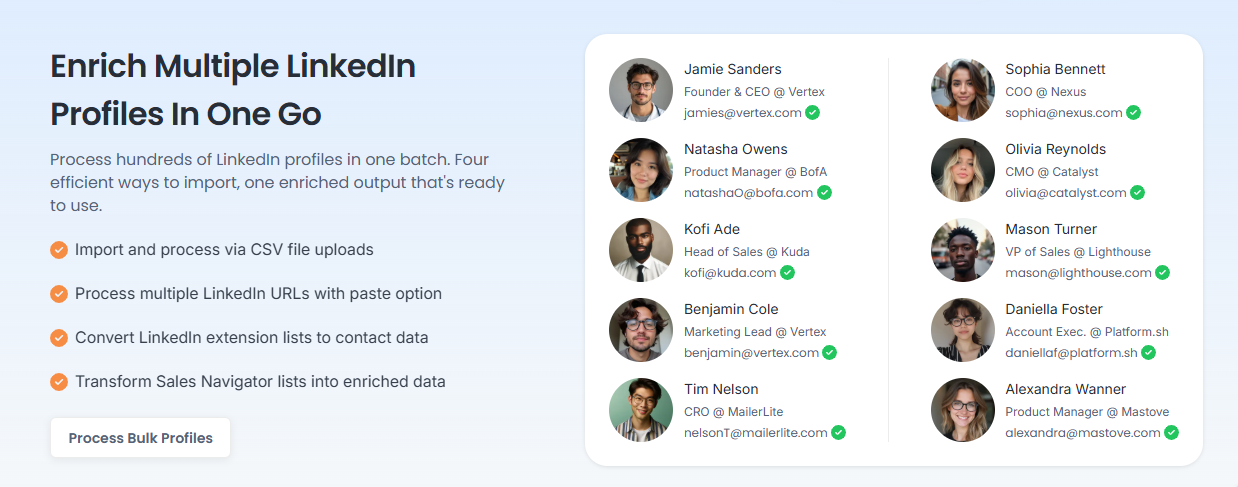
GrowthToolkit can convert LinkedIn searches, profiles, and groups into ready-to-use contact lists, then push verified emails and phone numbers to your CRM via API or webhooks. Profiles refresh at unlock, so you get current-company details.
Pricing is pay-as-you-go with 1,200 free credits on signup (no card). Designed for usage-based prospecting rather than per-seat tiers.
✅HubSpot: Best for Growing Businesses
HubSpot is an all-in-one inbound marketing, sales, and CRM platform. It’s best suited for growing businesses focused on content-driven and customer lifecycle management. It’s also the go-to omnichannel marketing tool for many marketing agencies and large-scale marketing organizations.
Its top strengths include:
🎯Inbound marketing automation: Tools for email campaigns, landing pages, forms, SEO, blogging, and social media scheduling to attract and convert organic traffic. You can also enroll contacts in specific messaging campaigns using email and SMS automation.
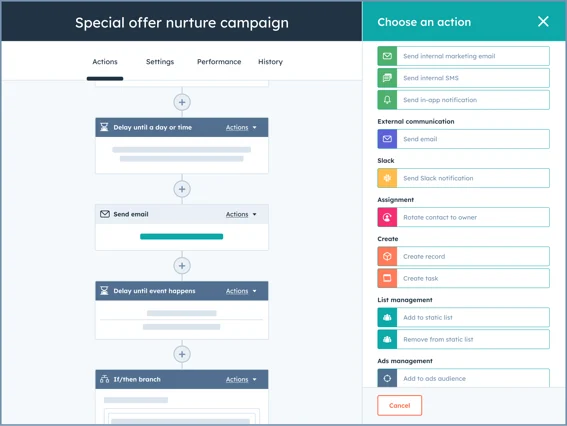
🎯CRM and sales pipeline: Free core CRM with deal tracking, lead scoring, meeting scheduling, and sales automation for small to mid-sized teams.
🎯Service and reporting: Unified customer support ticketing, knowledge bases, and multi-touch analytics across marketing, sales, and service hubs.
Compared to outbound tools like GrowMeOrganic, HubSpot prioritizes scalable inbound strategies over cold email prospecting.
Pricing ranges from $39 to $150+ per month, depending on how many credits and marketing contacts you need.
✅Mailchimp: Best for Small to Medium-Sized Businesses (& E-Commerce)
Mailchimp is best known for its email marketing automation, audience segmentation, and multi-channel marketing. It suits small to medium-sized businesses looking to engage customers through personalized email campaigns, SMS, landing pages, social ads, and CRM features.
Key strengths include:
📌Extensive integrations with e-commerce and CMS platforms
📌AI-powered content recommendations and automation
📌An intuitive drag-and-drop email builder
Detailed analytics

Mailchimp can also guide you to create targeted, automated customer journeys, such as welcome series and behavior-based follow-ups.
Pricing ranges from $13 to $350 per month, depending on the number of contacts you need. It also offers a basic free plan, but limits contacts to 250.
✅Lemlist: Best for Outbound Prospecting
Lemlist is a sales-outreach platform that helps you run cold email campaigns and multichannel outreach from your CRM.
You can use it to find leads (via a built-in database of hundreds of millions of contacts), verify emails, and personalize your outreach messages. After finding leads, you can reach out to them via WhatsApp, email, LinkedIn, or calls.

Pricing ranges from $69 to $99 per month, depending on the features you need. It also offers custom pricing options for large organizations.
✅Buffer: Best for Managing Multiple Social Media Accounts
Buffer is a social media workspace that helps you plan, post, and analyze content on many different social media platforms. (Including Instagram, Facebook, LinkedIn, TikTok, X, Pinterest, and more.)
You can use its drag-and-drop content calendar to plan and automatically schedule your posts across all of your social media accounts.
It also offers team collaboration tools for approvals and workflows. And analytics for tracking reach and top-performing content.
While it doesn’t natively offer email marketing, you can use Zapier to integrate it with Mailchimp.
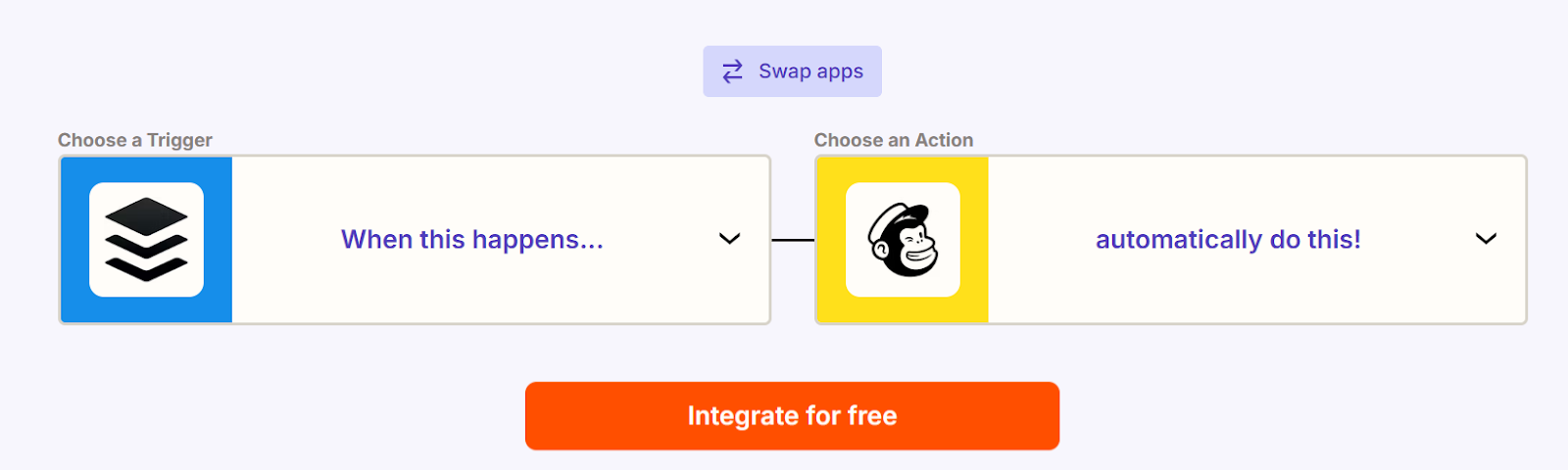
Here are some example triggers:
👉Trigger: New subscriber in Mailchimp → Action: Create a social post in Buffer
👉Trigger: Email campaign sent in Mailchimp → Action: Social reminder via Buffer
👉Trigger: New Buffer post → Action: Send an email via Mailchimp
Pricing ranges from $6 to $12 per channel, per month, depending on the features you need. It also offers a limited free forever plan where you can connect up to three channels with 10 scheduled posts per channel.
✅Sprout Social: Best for Enterprise-Level Teams
Sprout Social is a comprehensive social media management platform designed for businesses, teams, and agencies that handle multiple social accounts.
It helps teams handle publishing, engagement, listening, and analytics across channels like Instagram, Facebook, LinkedIn, TikTok, and more.
Its core strengths include its:
🔶Unified Smart Inbox, which gathers messages/comments/replies from all connected platforms, so marketers can respond from one place.
🔶Advanced publishing with optimal send times, including queuing, video/media editing, and cross-network scheduling.
While SproutSocial lets you email yourself and your team members PDF data reports from within the tool, it doesn’t offer a native email marketing function.
To create a social media and email outreach integration, you’ll need to use Zapier to connect it to SalesBlink.
Pricing ranges from $199 per seat, per month to $399+ per seat, per month. All plans are billed annually.
How to Combine Email and Social Outreach for Maximum Visibility
To combine email and social outreach for the most visibility, use any of the tools above to:
🎯Sync contact lists between your CRM, email, and social platforms.
🎯Create unified messaging for both channels.
🎯Use automation to send follow-up emails after social engagement.
🎯Retarget social media users with personalized emails.
🎯Track metrics across both channels (CTR, conversions, engagement).
🎯Prepare in advance (export sales Navigator lists).
Conclusion
Combining email and social outreach maximizes brand visibility, keeps your messaging consistent, and helps businesses nurture leads across multiple touchpoints.
Test one or two tools from the list above to unify your outreach strategy and measure the difference. (Most email and social media tools offer free trials.)
During the trials, answer these questions: Which tool helps build awareness and secure quality leads faster? Which tool helps us get more click-throughs and conversions? Which tool can better scale with our needs as we grow?
After you’ve picked a winner, choose a paid plan and build out your omnichannel campaigns.
Keep learning from your results and apply what works to meet your goals!
FAQs
Q 1. What benefits do you get by integrating email and social media rather than running them separately?
You get a broader reach and deeper engagement. Social media exposes new audiences, while email nurtures interest and encourages conversions.
Q 2. How can social media help grow my email list?
Use social posts or ads to drive traffic to email sign-up forms. For example, offer lead magnets, discounts, and exclusive content.
Q 3. How do I coordinate timing between email sends and social posts/ads?
Use a deliberate cross-channel sequence.
For example: Social teaser → email for depth/offer → social retarget or follow-up → email nurture or reminder. This sequence plays on different attention moments and leverages each channel’s strengths in a complementary way.
Q 4. Will combining email and social give me better results than using only one channel?
Combined campaigns tend to outperform single-channel efforts because they engage users at multiple touch points. You can also learn more from user actions to personalize your messaging.
Q 5. Does integrating email and social require special tracking or analytics setup?
Yes, to properly measure impact, you need cross-channel tracking. (For example, UTM tags, consistent attribution logic, and ideally a system that can link social-driven traffic and email-driven conversions.)
Make sure the tool you use offers tracking; otherwise you’ll need to integrate it with one that does.
About Post Author